About three years ago, I wrote a four-part series called Ferals and Fosters about three black kittens that a friend and I rescued. They marked the beginning of my journey in earnest as a hands-on fosterer and socializer of wild and semi-wild kittens and cats. I had been involved in rescue for years but had rarely really gotten my hands dirty. These three kittens showed me how great a difference one person can make. The final installment of that short series was about Sampson, a scared little black kitten who stole my heart as my first really difficult socialization success story.
When he was adopted, I cried like a little girl and I never stopped thinking of him. His new family rechristened him Sammy and sent me frequent updates about him via Facebook. Each new report made my heart sing; he was coming out of his shell and becoming a part of the family, even watching the husband play x-box and sleeping in bed with them and their other cat.
Last December I received a frantic message from Sammy’s adoptive human mom. They were returning to the US and during the pack-out with the movers, Sammy had somehow gotten out. Could I come help trap him?
I can only describe the next few days as panicked and tearful. I advised the family to put out his litter box and something with their scent on it. A small group of us searched day and night. We called. We sat and waited with smelly food. We put out the trap. We took canned mackerel and set it out all over the place. We put up posters and dropped flyers in every mailbox in the area. We created a Facebook group. As the days drew nearer for the family to get on the plane with their other two cats and their two children (both born since Sampson’s adoption, and one of the other two cats adopted since then), I became more and more depressed. Unfortunately, no one ever reported having seen him, and the family left as planned, but without Sammy.
A few of us kept looking for weeks. We set the trap in different places, hunted down potential leads (all dead ends and none of them actual sightings), and put out more flyers. We talked to people who lived in the area and contacted veterinarians. Absolutely zero. After several weeks with no sightings, nearly three months since he was lost, we had to admit we weren’t going to find him.
They lived near some busy roads, so he might have been hit by a car almost immediately. The family isn’t sure what time he got out so he could have been killed within minutes and picked up by city workers. Unfortunately, at that time, for reasons neither I nor his family understands, his microchip was not registered and so his body would have been unidentifiable. (When he was adopted, the chip was registered to me but when it was transferred to them, apparently it didn’t get re-registered. Lesson learned – double-check that your fur-babies’ chips are registered properly.)
He could also have been quickly adopted by another family who, for whatever reason, did not see our ads or flyers. This option is very unlikely because, as I found out from the adoptive mom, Sammy remained very cautious, somewhat fearful, and although he loved the two of them, he didn’t trust anyone else. My cautious, mistrusting little kitten had matured into a cautious, mistrusting little cat.
The third option, the most frightening one for me, is that he ran away and simply didn’t respond to any of our calls for him because he was either too scared or he simply didn’t want to come back home. Now my experience tells me that if he were too scared, he would have at least been spotted once or twice in the neighborhood, and as I said, we have no reports that he was. Further, within a few days, scared cats generally show back up. They gather their courage and return home.
I’m fairly certain, if Sammy was still alive at the time we were searching for him, he didn’t respond or return home because he didn’t WANT to come home. I know that sounds odd but I’ve thought a lot about this and talked about it with a couple of other folks, and we agree that it is certainly possible, and I think even likely.
You see, what had been, when he was adopted, a quiet and calm home with no kids and only one other cat became, within a year, a home with an infant and a third rescued cat (this one a life saved from the death list of a kill shelter). Shortly thereafter, another infant and now a toddler in the house. Finally there was the confusion and noise of not just one, but two household moves; only a few months before this one, they moved from the apartment to a house only a few doors down. Working for the government being what it is, their transfer to the US was a short-notice surprise. Add all of these elements together and you certainly have a situation that a mistrusting and fearful cat would seek to escape from.
Now, before all the potential judgement happens, when I adopted Sampson out, I made clear in the ads that he was fearful and needed lots of patience and a quiet home with NO KIDS. Further, I insisted upon that very firmly, in person, with the adopters. They assured me they had no plans to have children in the near future, and as I mentioned, in the first months after the adoption, Sammy made progress; he seemed to enjoy hanging out with the two of them. When the wife let me know, with some apparent trepidation, when they were pregnant, only a few months after the adoption, she assured me that it was a surprise. I trusted her as a long-time animal rescuer. In the best of situations, animal companions take a bit of a back seat when babies are born, and obviously the noise level grows as the household does. With all of this, and based on conversations with the parents since his disappearance, it seems that Sammy retreated some into his fearful shell, and this only further evidences that he wouldn’t want to come home.
Months later now, and I still cry for him sometimes. I pray for him often and think of him even more often. I punish myself with “what-if…’s” and “I should have…’s”. I hold out a tiny hope that perhaps, since he was micro-chipped (and now the chip is in my name again since his family is no longer in the country), he could still come home. But I have to admit, that hope is truly miniscule. And the thought that he is living the feral life somewhere terrifies me because I know how full of suffering – disease, hunger, predators, unmet needs – feral cats’ lives are.
I know that God hears me praying that if Sampson suffered, or suffers, that it is little or not at all, and that he either comes home to me or has a home where he is loved and feels safe. I suppose it is an unhappy testimony to how little I trust God that I continue to anguish sometimes about him. It pains me to admit that, but God knows how very human I am, and I trust He forgives me my frailties.
We foster families have many flaws, but we have one great strength which unfortunately is also a paradoxical weakness: love. We love each and every animal we take in, even if they stay with us for only a short time. For me, and I’m fairly confident this is true of all of us rescuers, there are three or four who are extra-special, whose effect on us is so profound that we are changed because of them. I loved Sampson; he taught me to never give up on a hard-case, that they could become the most loving of all. I never stopped thinking of him and I never stopped loving him, and if he one day manages to come back home, I will weep with joy.
The other installments: Ferals and Fosters, Part Two
Ferals and Fosters, Part Three
Sampson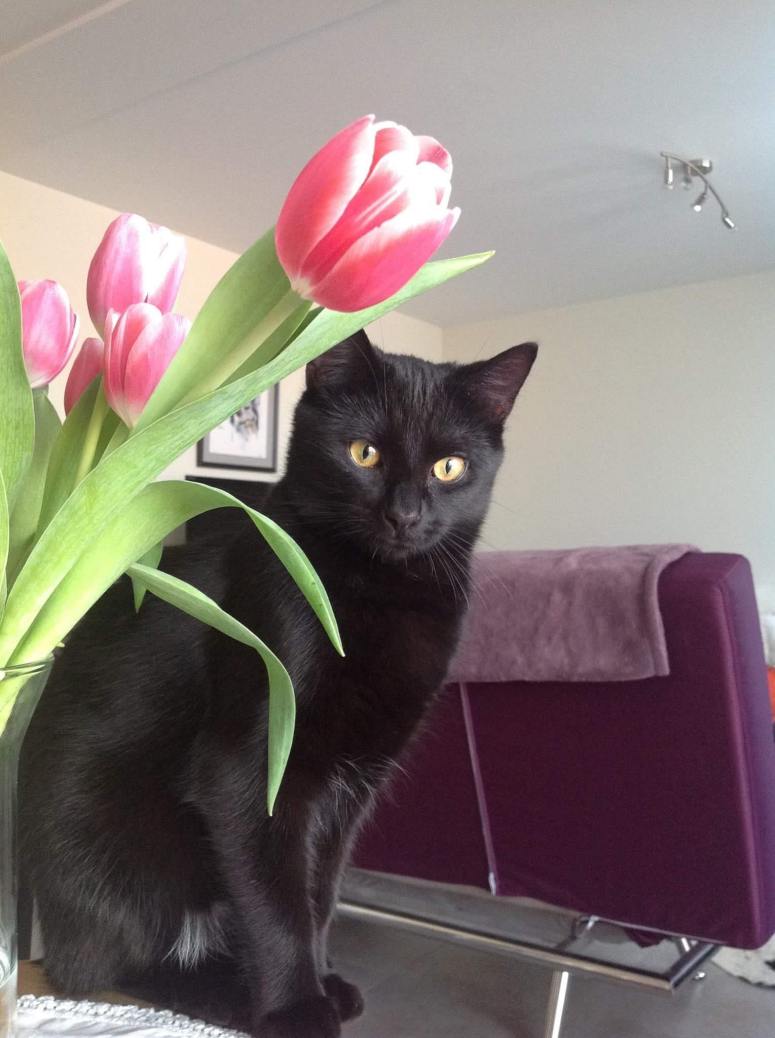
So you want to help community cats? Start here.
So you need to socialize some kittens? Click here.
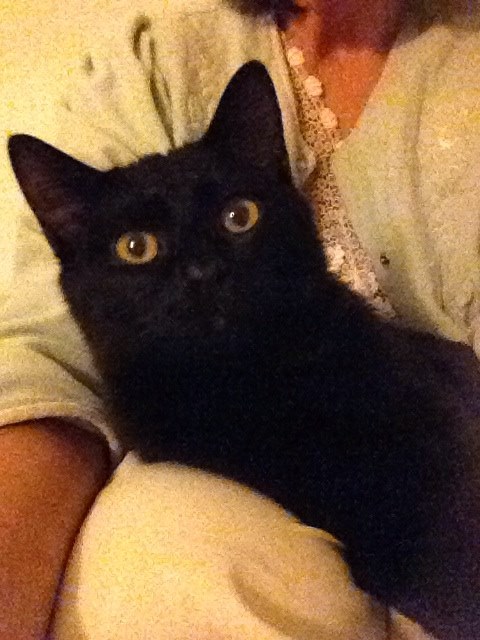
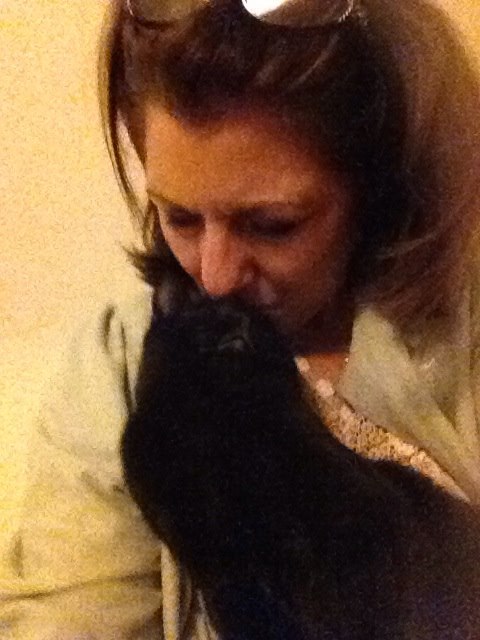
 What Living Feels Like