Another opening! Another show!
If you heard that in Ethel Merman’s voice, you are my people. Fellow drama queens (and kings). Not in the sense that regular people use the term, but in the amateur actor sense. I have been walking the boards in North Carolina and Belgium for over 30 years now. Often I do two shows a year, some rare times, I have done as many as three. It’s a commitment to performance art and to the other people involved that is far beyond what most people might think, but very unlike the commitment that Broadway and West End actors make. And that is what prompted this post.
When I go to Broadway or the West End to see a show, I am wowed every time. The people up on that stage are just beyond description; they give their all every performance, and they leave you breathless, speechless. You walk out of the theatre simply buzzing, your head full of the images and sounds you have just experienced, your whole body practically vibrating. When you go to your local theatre and watch your friends and neighbors up there… it generally isn’t quite the same. They may give some incredible performances, and you walk away thinking about how wonderful they were in the roles. Most of the time, it looks perfect to the audience, no errors noticeable, and the sets and lighting and music and performances are very good. Once in a while, you notice a little something that doesn’t seem quite right, and you wonder what just happened, but then you forget about it, because you get right back into the show. It’s a fun night out. But let’s face it, rarely do you leave a community theatre on the same high that you do when you are in New York or London. I know you don’t consciously think it, but in the back of your mind is the thought that the local actors are good enough for the local stage, but nobody in your community is Nathan Lane or Patti Lupone.
Let’s talk about that.
If you work as an actor or dancer on Broadway, according to Playbill, you work according to equity rules, typically eight hours a day, five to six days a week. This continues for five to eight weeks, sometimes longer, even much longer, if the show is a musical. You may work with a musical director, a choreographer, a vocal coach, a song coach, a dialect coach, and an acting coach. Then the week before opening, you work up to 12 hours a day for six days for Tech Week, known in the business as hell week. For all this you are paid a minimum of 2439 dollars a week, according to Backstage. Most shows play elsewhere for what are known as out-of-town tryouts before coming to the main stage on Broadway. And they play for months and months, so by the time you see the show, those actors can do it in their sleep.
Contrast that with your local community theatre. There is one director, and if it is a musical, there is one musical director and hopefully a choreographer. If you are very lucky, there is a vocal coach for the singers. Some of these people, if not all of them, are volunteers. There is a guy or gal who runs lights, and he might also run sound, but again, if you’re lucky, there’s one for each, again, almost certainly volunteers. The set designer might be paid but is more often a volunteer who depends on a team of other volunteers to build the set and bring his vision to life. The actors, also 100% volunteers, come to the theatre after work and rehearse two to four hours a night, then go home, fall into bed, and come back the next night and do it again. They do this for four to six weeks. They MIGHT come in on the Saturday before opening for a tech day, often an exhausting eight-to-ten-hour day of costumes and makeup and standing under hot lights so the lighting and sound is just right. Then the week of opening, they rehearse in full costume and makeup every evening, running the show to fine-tune transitions from scene to scene and every little detail of the show. Most directors, usually the only paid person in the equation, try to get the actors out of the theatre before 10 pm so they can get some rest before they have to go to their actual jobs the next day. When they open, they are performing for the first time for an audience, and they will get to perform the show three to nine times, then it is done. When you see the show, they have only performed it a few times for an audience, and in its entirety only a few other times in rehearsal.
I’ve worked in community and regional theatres with some of the best actors on the planet. Actors almost no one will ever see and whose name will only be remembered by the people who love them. They are local clerks, kennel managers, postal workers, teachers, secretaries, soldiers, housewives, paralegals, and even an army chaplain! Some of us have had formal training, but most not. Some of us have done a scene study or two in our lives, to try to get better at this “hobby,” to do justice to this love of theatre and performing. But we are amateurs, not professionals.
Why are those of us that are supposedly so darn good working in anonymity instead of being rich and famous, you ask? Some would say we lack the drive or ambition. Some would say we aren’t beautiful enough. Some might even say we aren’t as talented as we like to think. After much reflection, I would say some of those things are likely true. But more than that is the truth of what we gain by choosing to be and stay amateurs: family, freedom, and normalcy. We don’t want to uproot our lives and live in a big city, and we want to do other things besides being a famous or semi-famous actor. We don’t have to be away from our loved ones for weeks at a time, and we don’t have the “grand publique” pulling us left and right, expecting to get a piece of us, and expecting certain behaviors from us. We can eat in restaurants and go to concerts and be in public without interference. We can gain a few pounds and look our age, and everything is fine.
Then there is the question of values. I used to have a dear friend with whom I went to church who was a star on our local theatre stage in Asheville, NC; what a singer that gal is! I once asked her why she didn’t go to New York; she could have made it on Broadway with that voice. She considered it once, she said, but then she realized that to support herself, she would have almost certainly had to take any and all the roles she was offered, at least at first, and she would have probably had to compromise her values. By being an amateur, she could take the roles she wanted, love what she was doing, and be respected locally for her talent. That hit home.
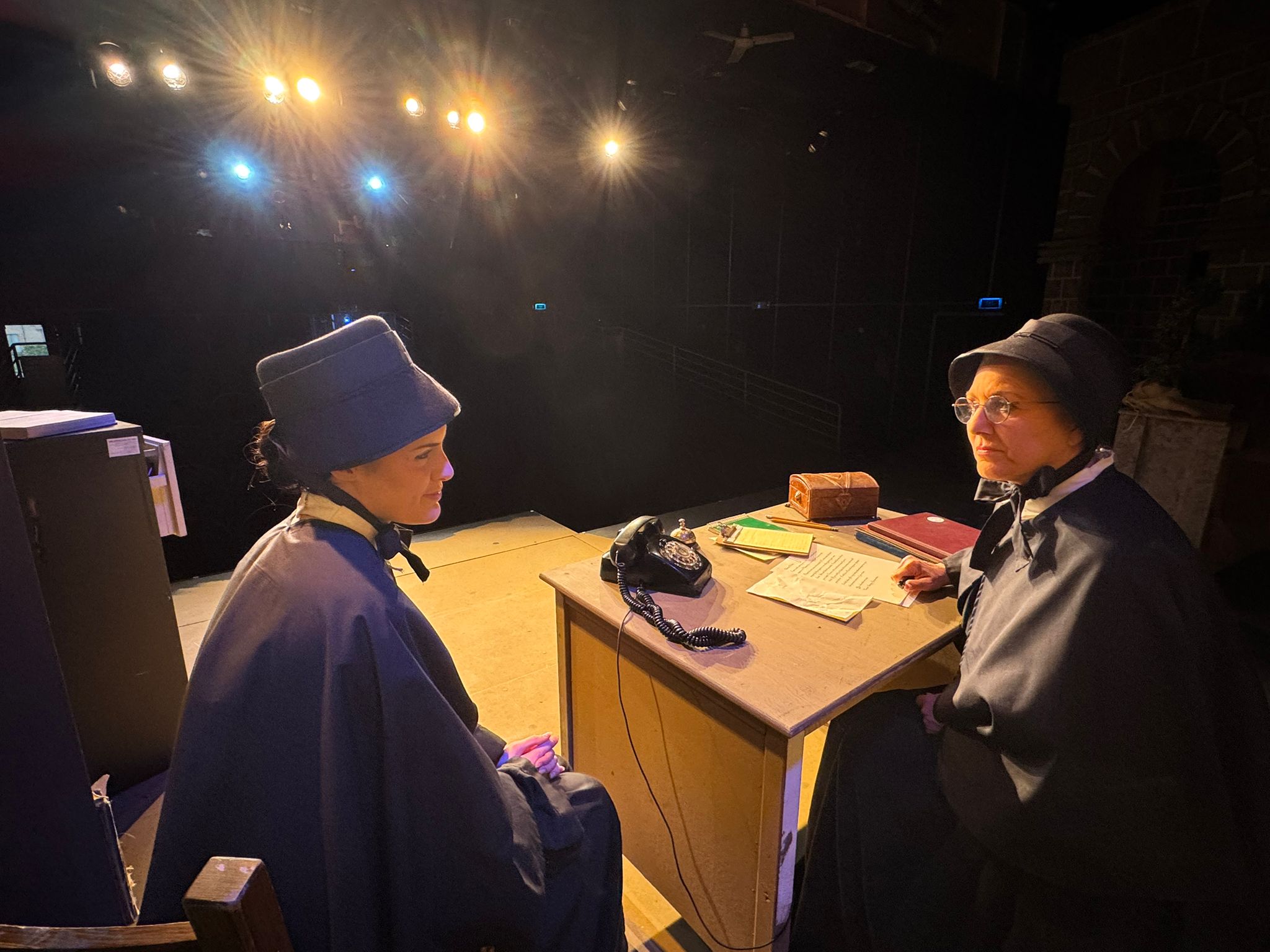
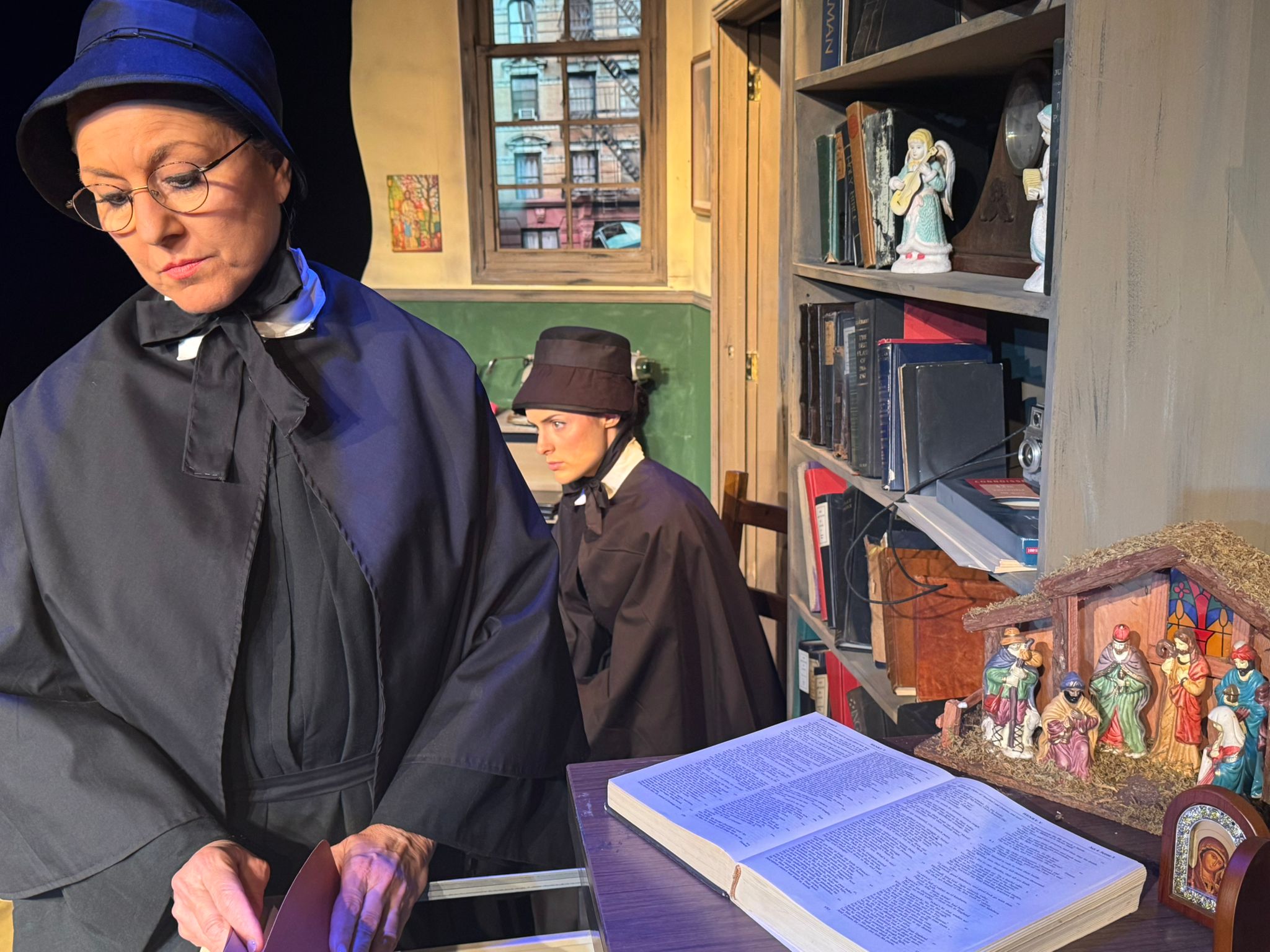
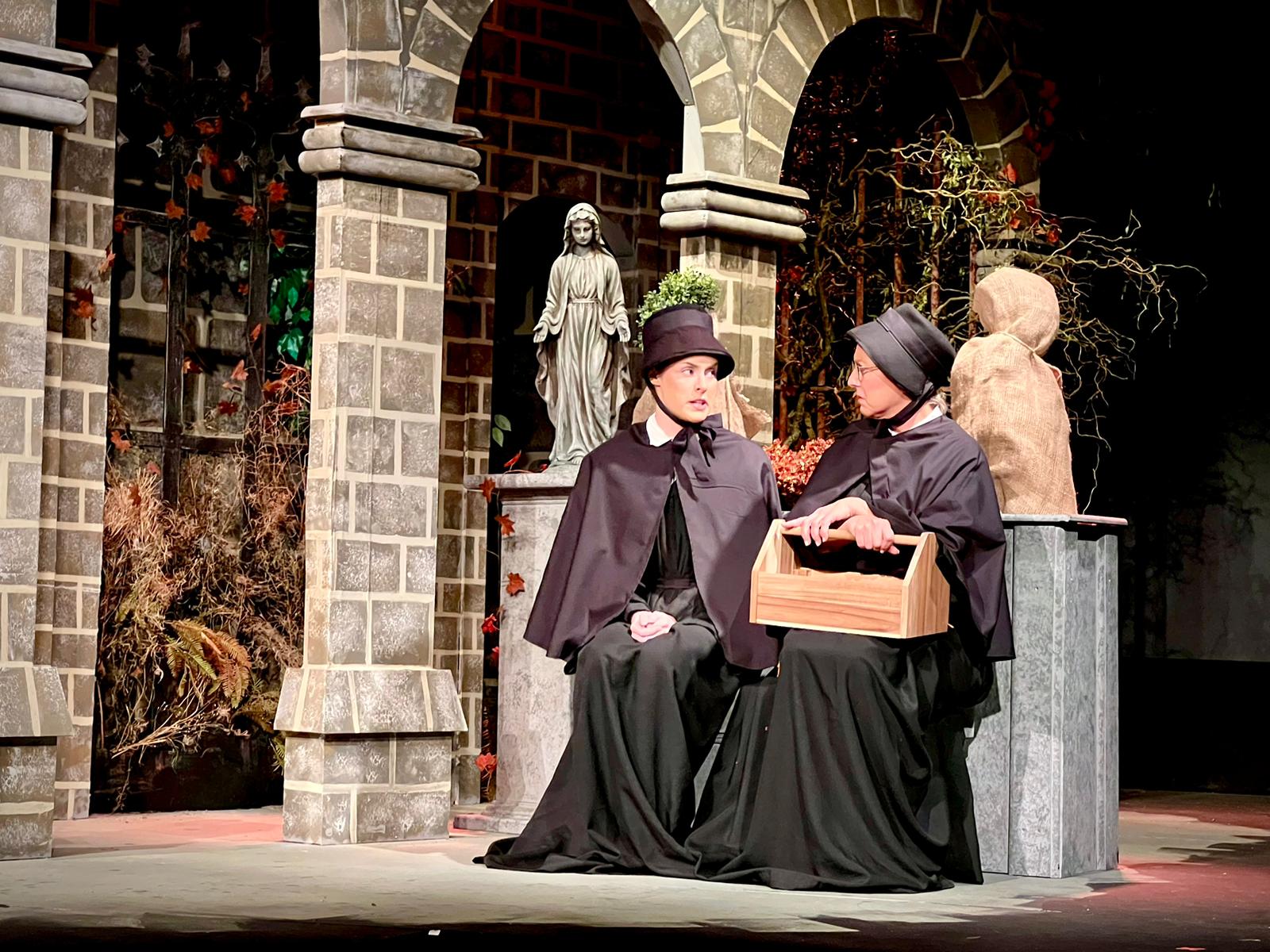
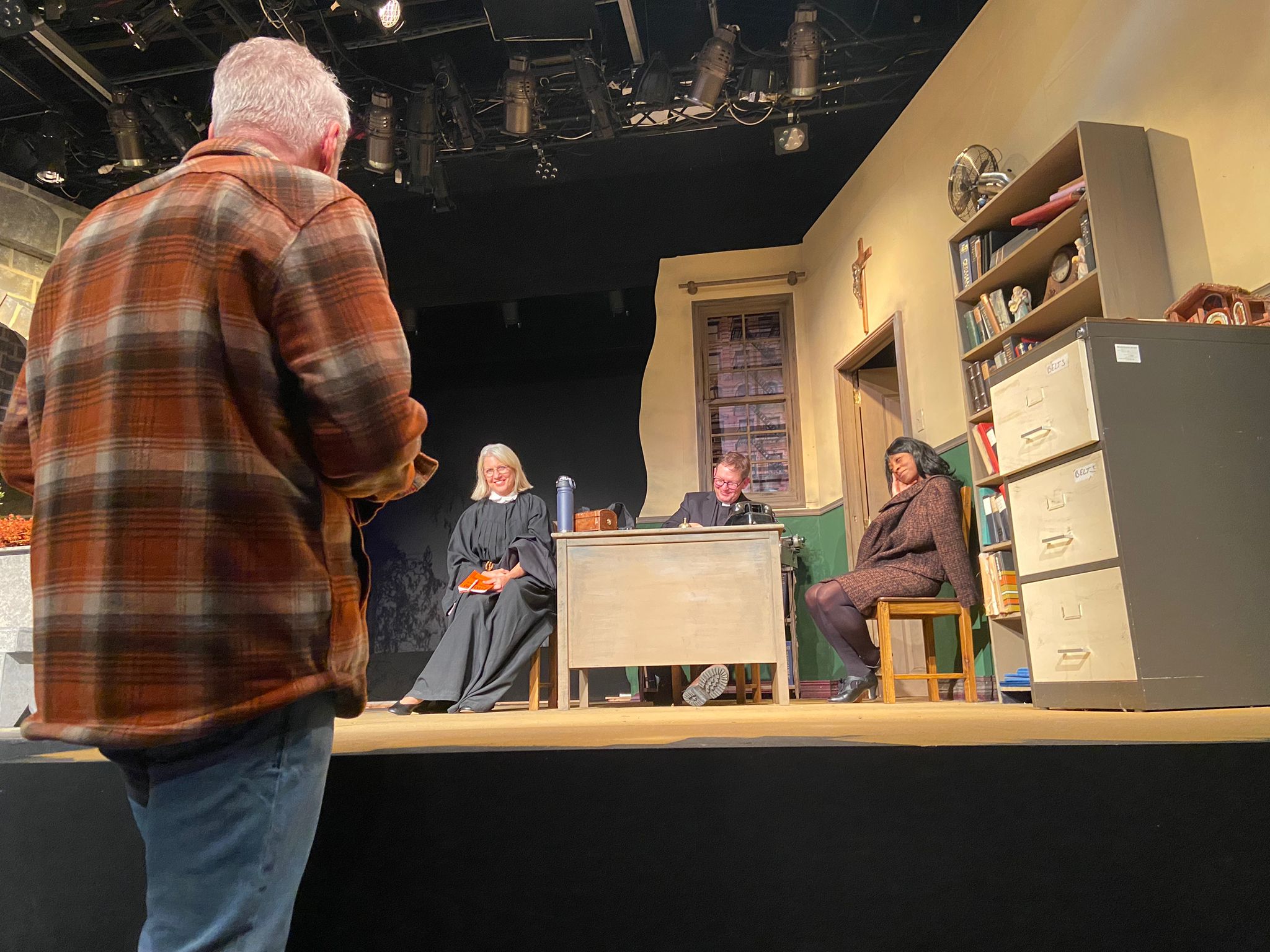
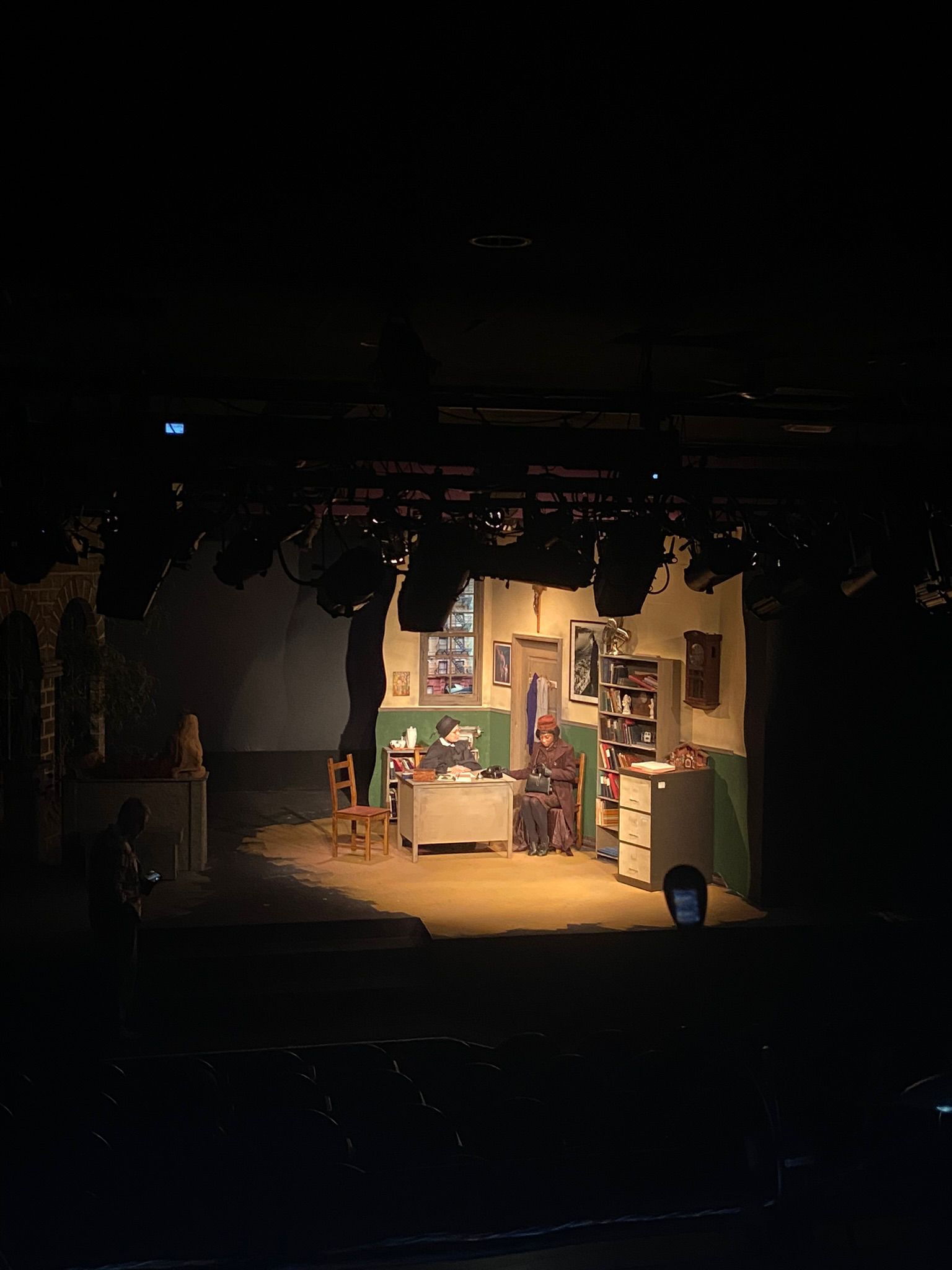
Right now, a very small, very talented group of amateur actors are giving some pretty darn exceptional performances on a tiny, obscure stage in the corner of a small cluster of buildings in Belgium. We are performing Doubt, an 85-minute drama that plays without an intermission, and leaves you with more questions than answers. Meryl Streep played “my” role in the movie, Tyne Daly on Broadway. I love our performances. We are serious and determined, and we are kicking some acting a**. We are getting rave reviews from the handful of people who are seeing us perform, and we all feel so blessed to be able to do this provocative and hard-hitting show.
Also right now, in tiny local theatres all across the world, similar groups of people are also rehearsing and getting ready to present their talents on those small stages, to audiences made up of their friends and neighbors. Most of them are also kicking a**. They are very good at what they are doing, and they are loving doing it. It is exhausting them, but invigorating them, and making them feel proud of using the gifts God gave them.
Next time your local community theatre puts on a show, go see it. Support the local arts community and remember to think about how little time they have had to rehearse and to develop their characters. Give them some praise, sure; but more importantly, give them some respect. They have done in a matter of a few short hours of rehearsal what those equity actors you rave about take four times that (often more!) to do. The talent among those amateurs is GLORIOUS.
Patti Lupone, I’m not, and never will I be. I’m me, Sunny Boone, dedicated to my craft, just as she is dedicated to hers. And I bet she’d like my performances.
Amateur: from the French, one who loves something, one who does something simply for the love of it, without being paid.


You are a hard-working and gifted actress. Excellent post! A gifted writer, too.
LikeLike
Thank you, Stephanie!
LikeLike